
An interactive experience
Visitors are welcomed into an immersive, multisensory room and transported into the heart of the “white continent”, among icy landscapes and polar sounds. Here begins an exhibition route that combines knowledge and emotion, covering thirteen thematic areas and linking science, technology and human adventure. The aim is to communicate the main phenomena of Antarctica and its unique features: from the movement of the ice to microscopic life forms, from oceanographic missions to astronomical observations in the southern sky.
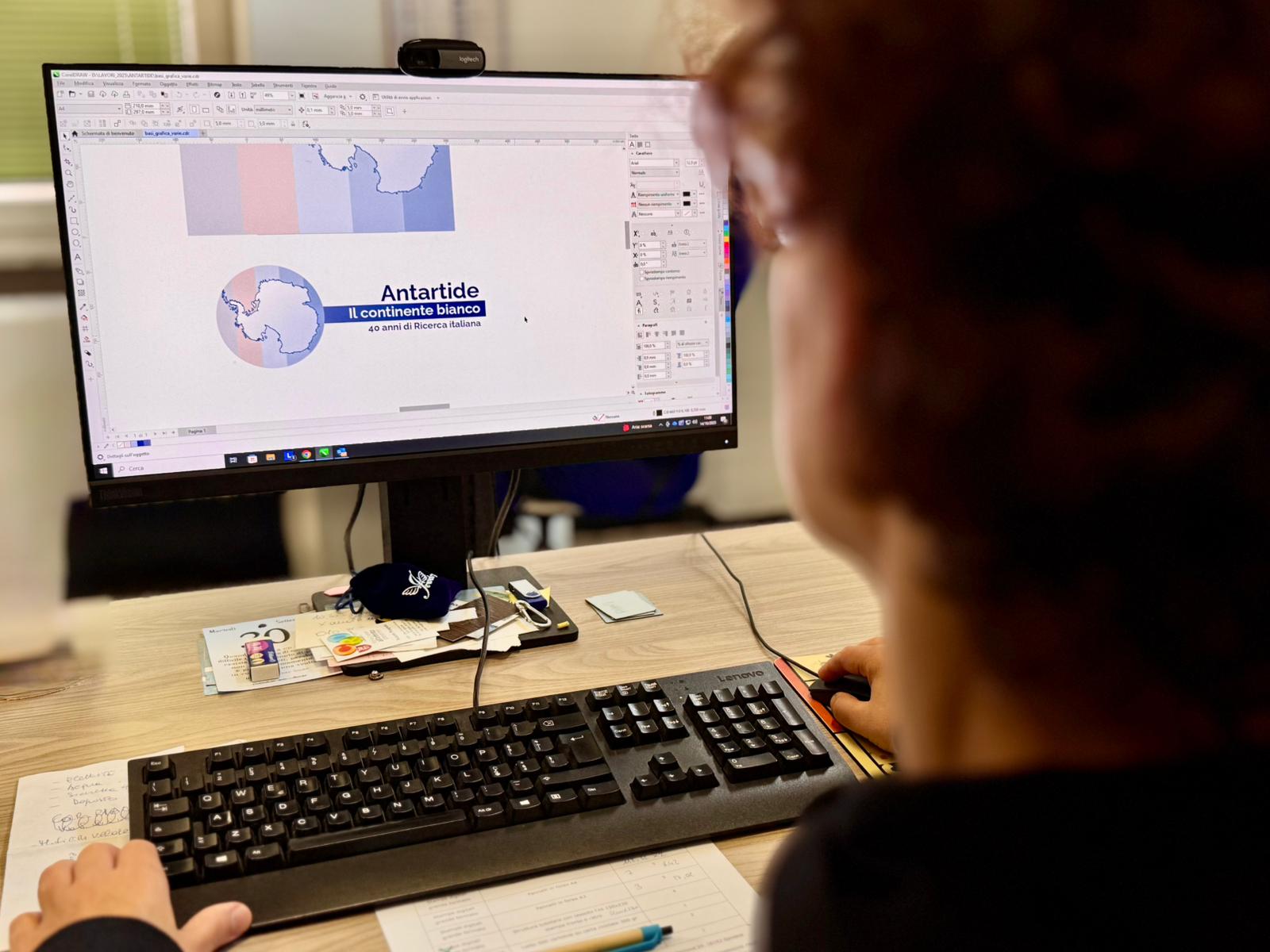
Among scientific instruments, dynamic models, mechanical and digital exhibits, visitors are invited to experiment first-hand, to touch, observe and think, approaching the scientific themes presented in the exhibition through direct experience and emotional engagement. The exhibition is created within the Scientific Carpentry and the Scientific Electromechanics Laboratory of the CNR Public Relations and Integrated Communication Unit, where interactive exhibits and prototypes take shape, blending creativity, technology and science communication.
The experience is enriched by the presence of science communicators and facilitators, who help visitors access the exhibition content and engage the public by adapting language to the age and background of each audience group.



An Exhibition for Schools
A class visit to the exhibition lasts 90 minutes and is led by a science communicator. Classes are guided through an engaging route that can be tailored to age and level, with moments of hands-on experimentation, storytelling and dialogue.
Whenever possible, visits are enriched by the presence of scientific staff from the institutions involved in the National Antarctic Research Program (PNRA), who share their direct experience in Antarctica and describe life and work in extreme conditions.
Through accessible language and clear, immersive visual communication, the exhibition aims to stimulate curiosity, critical thinking and environmental awareness, bringing the wonder and importance of scientific research into the classroom.
Educational objectives
Understand the role of Antarctica in the Earth’s climate system
Discover methods, instruments and findings of scientific research in extreme environments
Develop curiosity, inquiry skills and critical thinking
Promote environmental awareness and international cooperation
Subjects involved
Earth Sciences, Physics, Biology, Natural Sciences, Geography, Technology, History, Civic Education (2030 Agenda, climate change)
Information for schools
Guided tours are free of charge from 2 December 2025 until 23 January 2026.
Monday to Friday, 09:00 – 13:30 (excluding public holidays and the Christmas break)
Entry every hour, visit duration 90 minutes
Booking required
Scientific themes
The exhibition unfolds along a route that tells the story of the complexity of Antarctica and of the research carried out there. It begins with the geographical and geological context, to understand the structure of the continent and its connection with Earth’s history, and moves through the major topics of glaciology, subglacial hydrology, climate and the atmosphere. One section is dedicated to the Southern Ocean and its role in the global climate system.
The following areas explore the history of Antarctic exploration and the geopolitical issues regulated by the Antarctic Treaty.
The second part of the visit focuses on Italy’s research projects and on the main infrastructures that our country operates in Antarctica. A section devoted to the life of scientific personnel introduces paleoclimatology and research carried out on ice and sediment cores, oceanographic studies, and finally astronomical and space observations. The route concludes with reflections on global environmental challenges, on the value of international cooperation, and on the contribution that Italian research makes to understanding climate change and building a more sustainable future.

During the visit, the public will also have the opportunity to talk with scientific and technical staff who have taken part in Italian expeditions to Antarctica and to hear directly from them what it means to live and work in such an extreme environment.