Life in Antarctica
download the panelThe Antarctic continent and its seas are inhabited by organisms adapted to extreme conditions. Examples of perfect adaptation are found among microorganisms that can live inside rocks (endolithism), in subglacial lakes or hypersaline waters, or trapped in ice.
Antarctic Vegetation
There are no flowering plants on the mainland: the only two species are found on the Antarctic Peninsula, and terrestrial vegetation is limited to mosses, algae, and lichens that colonize rocks with vivid red, orange, and yellow growths. In summer, green lichens growing on bare rock can reach a few centimeters in height, giving the impression of a lawn from a distance.

Antarctic krill (Euphausia superba) viewed under a microscope, showing numerous structures – Credit: Uwe Kils, via Wikimedia Commons

LBM1948, Yalour Islands, Antarctica – Credit: Wikimedia Commons, CC BY-SA 4.0
Coastal and Marine Life
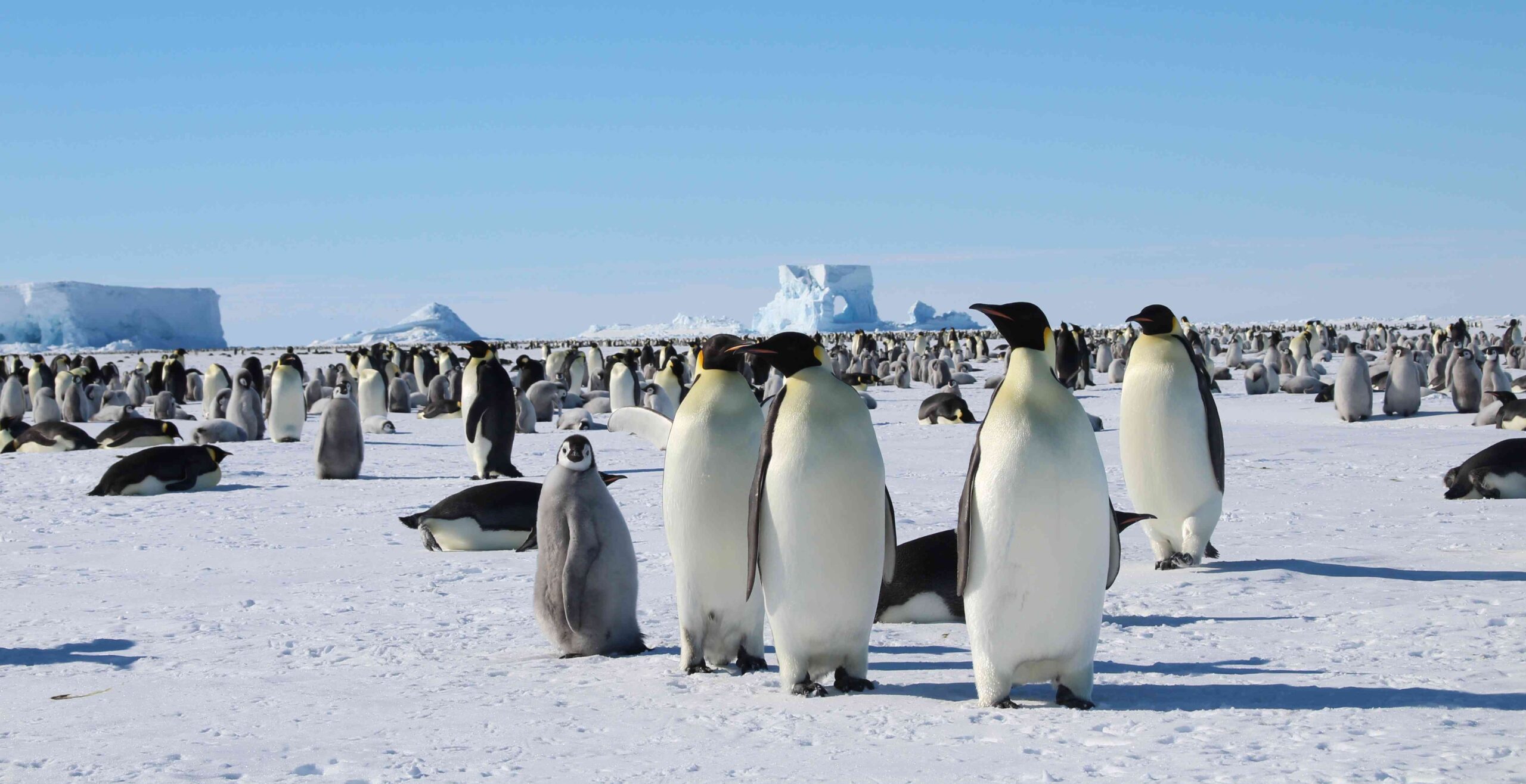
Coastal areas host birds, such as penguins and skuas, and marine mammals, such as seals, which live and reproduce, drawing sustenance from the marine environment. While the land is mostly an icy desert with scattered oases along the coast, the seabed hosts an extraordinary variety of life forms. Over 8,000 species of benthic organisms and more than a hundred species of bottom – dwelling fish, including icefish (with colorless, hemoglobin-free blood), live there – an unparalleled adaptation story.
Off the Southern Ocean, large quantities of Antarctic krill feed fish, penguins, and whales, supporting a rich and diverse food web crucial for ocean productivity.
Terrestrial Fauna
If the vegetation is unique, Antarctic fauna is no less so. Inland, the largest animals are invertebrates just a few millimeters long: tardigrades, nematodes, rotifers, mites, and springtails.
These animals have perfectly synchronized their lives with the seasons and survive the low winter temperatures by entering dormancy, becoming active again in summer when the ice melts.

Tardigrade Mopsechiniscus franciscae, observed with a scanning electron microscope. The asterisk marks the mouth, which is used to pierce the cell walls of plants or bacteria and extract their contents.
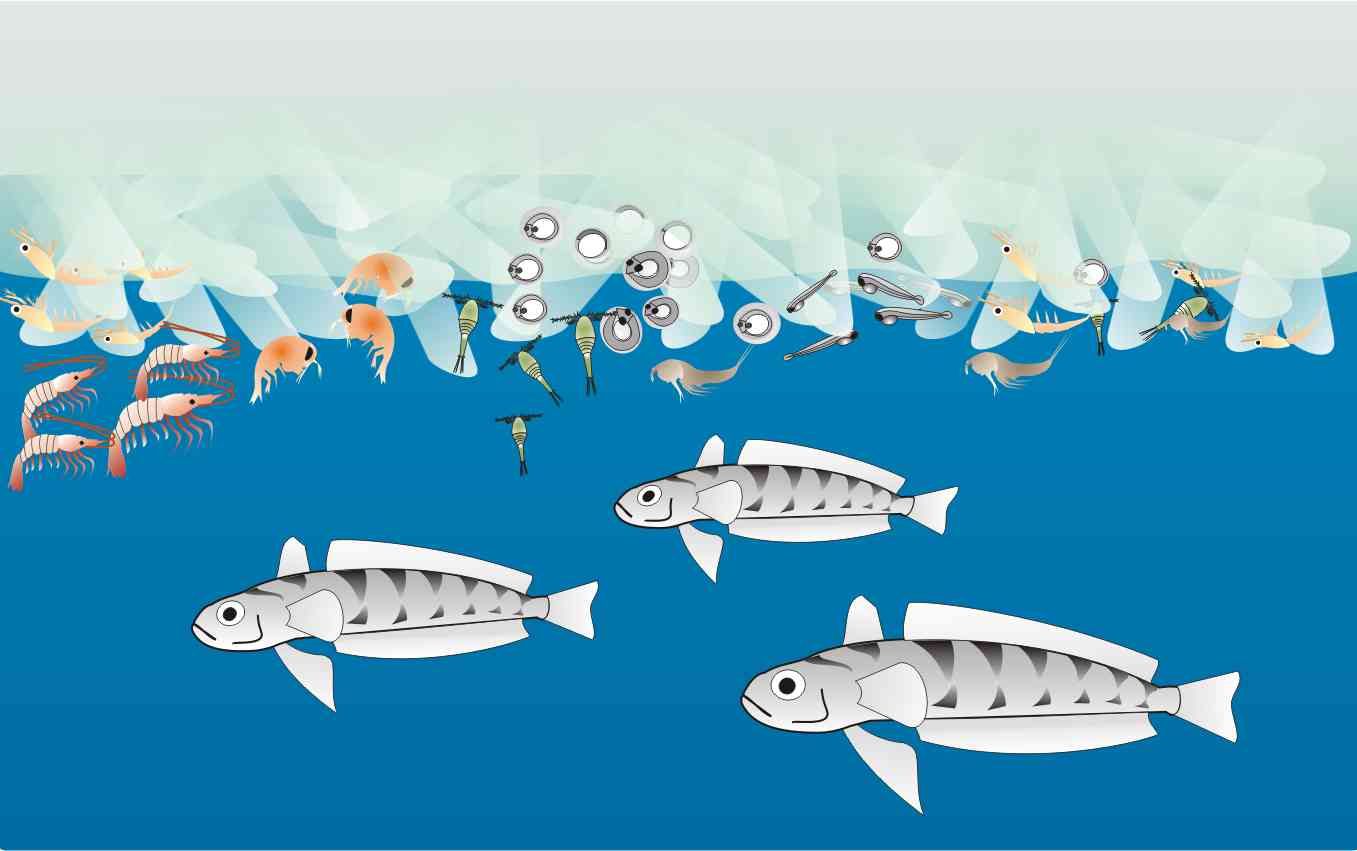
Antarctic silverfish
This small pelagic fish has a unique reproductive strategy, discovered through research by the Italian National Antarctic Research Program (PNRA): its eggs develop among the ice lamellae formed in winter under coastal ice.
The incubation and hatching area near Terra Nova Bay remains the only one described for the species.